




Table of Contents
- 1.
- 2.
- 2.1
- 2.2
- 3.
- 3.1
- 3.2
- 4.
- 4.1
- 4.2
- 4.3
- 5.
- 5.1
- 5.2
- 6.
- 6.1
- 6.2
- 7.
- 7.1
- 7.2
- 8.
- 8.1
- 8.2
- 9.
- 10.
The Rise of Vernacular Digital Marketing Jobs in India
Digital marketing is growing fast, but English-only strategies are no longer enough. Today, vernacular digital marketing jobs in India are in high demand because people prefer consuming content in their native languages. As more users search, scroll, and watch videos in regional languages, brands are rapidly shifting their marketing efforts to match this behavior.
This change has created a clear gap: companies need marketers who understand both digital platforms and regional audiences, but skilled professionals are still limited. For freshers and career switchers, this opens up a strong opportunity to enter niche roles, get hired faster, and build long-term career stability.
In this blog, we’ll take a closer look at why vernacular digital marketing is growing, how it’s creating lakhs of jobs, and what it means for your career going forward.
What Is Vernacular Digital Marketing?
Vernacular digital marketing is the practice of communicating with audiences in the language they naturally think, speak, and search in online. As internet adoption grows rapidly beyond English-speaking users, brands that rely only on English are leaving massive reach and revenue on the table.
Today’s digital users prefer content that feels familiar, local, and human. Vernacular marketing helps brands move closer to their audience by speaking their language literally and culturally.
Meaning of Vernacular Marketing in the Digital Era
Vernacular digital marketing involves promoting products or services using regional and local languages rather than relying only on English. It is not a simple translation; it is about relevance and cultural connection.
Key aspects include:
- Creating content in languages users think, search, and engage in
- Adapting tone, examples, and messaging to local culture
- Using vernacular languages across:
○ SEO blogs and web pages
○ Social media posts and ads
○ Video content and short-form reels ○ Messaging platforms and local communities - Applying transcreation instead of word-by-word translation
English-only vs Vernacular strategy
English-only:
- Limited reach
- Lower emotional connection
Vernacular:
- Wider audience access
- Higher trust and relatability
Why Tamil, Hindi, Telugu Content Performs Better Than English
Regional-language content consistently delivers stronger results because it aligns with real user behavior.
Key performance advantages:
- Higher engagement due to ease of understanding
- Stronger trust when brands speak the user’s language
- Better recall using familiar expressions
Localized buyer intent, indicating readiness to act As explained in regional language content in digital campaigns, brands using vernacular-first strategies see measurable improvements in reach, engagement, and conversions – making vernacular digital marketing a core growth channel rather than an optional tactic.
Why Vernacular Digital Marketing Is Growing Rapidly
Vernacular digital marketing is growing fast because the digital audience itself has changed. New internet users are no longer English-first. They browse, search, watch, and buy in the languages they use every day.
As technology access improves and content platforms localize aggressively, brands must adapt or risk becoming invisible.
1. Massive Growth of Regional-Language Internet Users
Millions of new users are coming online from non-metro and regional areas. Most of them prefer content in their native language, not English.
Ignoring vernacular means ignoring the majority of the digital population.
2. Mobile-First Users Prefer Local Languages
Smartphones made the internet accessible to everyone. Voice search, video, and messaging apps work better when content matches how users naturally speak.
Vernacular content feels easier, faster, and more comfortable to consume.
3. Higher Trust and Emotional Connection
People trust brands that speak their language. Regional content feels personal, relatable, and authentic leading to stronger engagement and brand loyalty.
Trust drives conversions. Language builds trust.
4. Social Media and Video Platforms Reward Local Content
Short videos, reels, and regional creators dominate engagement. Algorithms prioritize content that keeps users watching and vernacular content does exactly that.
Local language = higher watch time = better reach.
5. Better SEO and Discoverability
Users search in regional languages. Vernacular SEO helps brands appear in untapped search queries with lower competition and higher intent.
Less competition. More relevance. Better results.
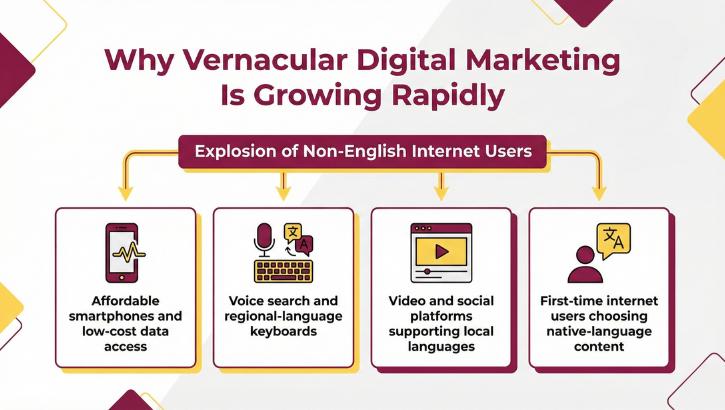
Explosion of Non-English Internet Users
The primary growth driver is the sharp rise in non-English internet users. A large portion of new users prefer browsing, searching, and engaging in their native language rather than English.
Key factors behind this shift include:
- Affordable smartphones and low-cost data access
- Voice search and regional-language keyboards
- Video and social platforms supporting local languages
- First-time internet users choosing native-language content
According to India’s internet users to exceed 900 million driven by Indic languages, a majority of internet growth is now coming from regional-language users. This trend is further reinforced by reports such as NDTV’s analysis on internet user growth, which highlights how non-English users dominate new digital adoption.
Brands Actively Shifting to Regional Language Marketing
As audiences change, brands are adapting fast to avoid losing reach and relevance.
Major reasons brands are investing in vernacular marketing:
- Higher engagement compared to English-only campaigns
- Better trust for education, finance, and career decisions
- Improved conversion rates from localized messaging
Ability to scale campaigns across diverse user segments this shift has made vernacular digital marketing a core business strategy, not a secondary experiment. As a result, demand for skilled professionals who can execute regional-language campaigns is growing rapidly directly contributing to large-scale job creation.
How Vernacular Digital Marketing Will Create Lakhs of Jobs by 2030
Vernacular digital marketing is more than a change in content language. It is becoming a major job creation engine. As brands scale regional-language campaigns across platforms, they need people who understand local languages, local culture, and digital tools all at the same time.
This shift is opening doors for a new kind of digital workforce.
By 2030, businesses will no longer depend only on English speaking marketers. They will need talent that can connect with audiences in Tamil, Telugu, Hindi, Malayalam, Kannada, Bengali, Marathi, and many more regional languages. This growing demand will create lakhs of new jobs across India.
These roles go beyond writing content. Brands require professionals who can:
- Create vernacular social media content
- Run regional SEO and keyword research
- Manage local-language ad campaigns
- Produce short-form videos and reels
- Handle community engagement and messaging platforms
- Adapt brand communication to local culture
The best part?
Most of these jobs do not require advanced degrees or metro-city exposure. They reward language fluency, creativity, and digital skills making opportunities accessible to students, freelancers, creators, and career switchers from all regions.
As internet usage grows in tier-2 and tier-3 cities, vernacular marketing teams will become core business units, not support roles. Companies that want real growth will invest heavily in regional talent.
Rise of Regional Content Creators and Marketers
The first wave of job creation is happening in content-driven roles where language plays a critical role.
High-demand roles include:
- Vernacular content writers and copywriters
- Regional social media managers
- Video scriptwriters and creators for reels, shorts, and YouTube
Influencer marketing coordinators for language-specific audiences these roles exist across industries such as education, e-commerce, fintech, and media. Unlike generic content jobs, vernacular roles face lower competition and faster hiring due to skill scarcity.
Growing Demand for Language-Specific SEO and Paid Ads Experts
Search and advertising behavior varies significantly across languages, creating demand for specialists.
Key job opportunities include:
- Vernacular SEO specialists handling regional keyword research
- Local-language Google Ads and Meta Ads managers
- Conversion-focused landing page optimizers
- Campaign analysts for regional performance data
Brands are willing to pay premium salaries for professionals who can deliver ROI from vernacular campaigns.
Expansion of Social Media and Video Marketing Roles
Short-form video platforms are accelerating job growth in regional marketing.
Opportunities include:
- Regional video strategists
- Community managers for language-based audiences
Performance marketers for social platforms. This expansion aligns closely with broader career trends highlighted in Top Digital Marketing Jobs in 2025 – Roles, Skills, Salaries, and Future Scope, positioning vernacular digital marketing as a long-term, high-growth career path.
Career Scope and Salary Potential in Vernacular Digital Marketing
Vernacular digital marketing offers a wide and scalable career path because it blends high-demand digital skills with language specialization. As regional-language campaigns become a priority for brands, professionals with vernacular expertise are seeing faster hiring and stronger long-term growth.
Career Opportunities from Entry-Level to Advanced Roles
The career scope in vernacular digital marketing spans multiple roles and experience levels, making it suitable for freshers, career switchers, and experienced marketers.
Common job roles include:
- Vernacular Content Executive / Copywriter – blogs, ads, social posts in regional languages
- Regional SEO Specialist – optimizing content for local-language search behavior
- Social Media Manager (Regional Markets) – managing engagement and campaigns
- Performance Marketer (Vernacular Ads) – running Google and Meta ads in regional languages
- Vernacular Marketing Strategist – planning full-funnel, multilingual campaigns
With experience, professionals can move into leadership or consulting roles focused on regional growth strategies. Because this skill combination is niche, career progression is often faster than in general digital marketing roles.
Salary Growth and Demand Advantage
Salary potential in vernacular digital marketing is driven by a clear supply – demand gap. While many marketers understand digital tools, fewer can execute high-performing campaigns in regional languages.
Key salary advantages include:
- Faster job placement due to niche demand
- Better negotiation power for language-specific skills
- Strong freelance and remote opportunities
Long-term relevance as regional markets expand. Industry insights such as The scope of digital marketing careers show that specialists consistently outpace generalists in growth and compensation – making vernacular digital marketing a smart, future-proof career choice.
Skills Required to Build a Career in Vernacular Digital Marketing
Building a successful career in vernacular digital marketing requires more than just knowing a language. Professionals must combine core digital marketing skills with local-language and cultural expertise to deliver measurable results for brands.
Core Digital Marketing Skills You Must Master
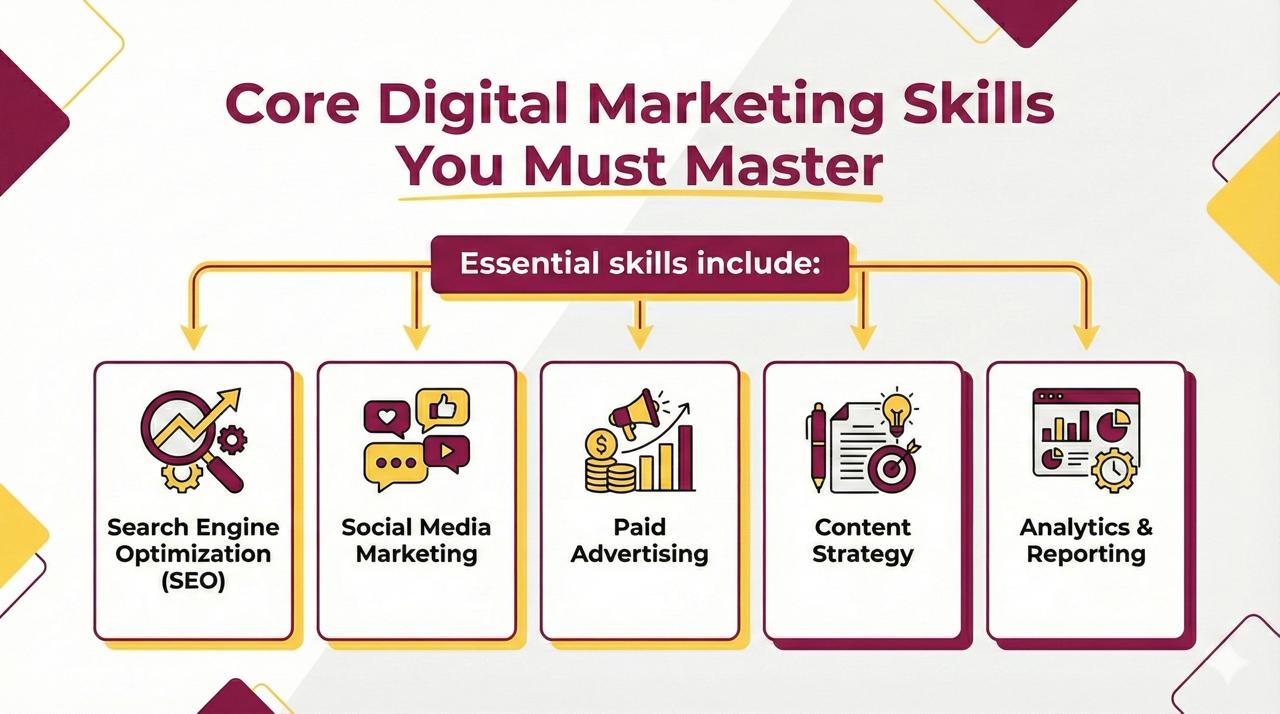
Regardless of language, every vernacular digital marketer must be strong in digital fundamentals. These skills ensure campaigns are performance-driven, not just creative.
Essential skills include:
- Search Engine Optimization (SEO): Keyword research, on-page optimization, and content structuring
- Social Media Marketing: Platform-specific strategies for reach, engagement, and growth
- Paid Advertising: Google Ads and Meta Ads with performance tracking
- Content Strategy: Aligning blogs, videos, and ads with user intent
- Analytics & Reporting: Interpreting data to optimize campaigns most learners start by building this foundation through structured learning resources such as Digital Marketing for Beginners before moving into vernacular specialisation.
Language, Localization, and Audience Psychology Skills
What truly differentiates vernacular digital marketers is their ability to localize content effectively.
Key language-focused skills include:
- Transcreation: Adapting meaning and emotion, not just translating words
- Cultural relevance: Using familiar examples, tone, and references
- Localized keyword intent: Understanding how search behavior differs across languages
- Audience psychology: Knowing what builds trust and drives action
Professionals who master both digital tools and language nuance consistently deliver higher engagement and conversions. This combination makes vernacular digital marketing skills rare, valuable, and highly sought after – creating long-term career stability in a competitive digital job market.
Why Professional Training Is Essential for Vernacular Marketing Careers
Vernacular digital marketing demands hands-on execution, not just theory. Because campaigns operate across languages, platforms, and performance metrics, structured training becomes critical to move from basic knowledge to job-ready expertise.
Why Self-Learning Is Not Enough for Vernacular Digital Marketing
Self-learning can introduce concepts, but it rarely prepares learners for real-world vernacular campaigns where accuracy, tone, and performance matter.
Key gaps in self-learning include:
- No exposure to live campaigns with real budgets and deadlines
- Limited guidance on vernacular keyword research and intent mapping
- Lack of feedback on language nuance, tone, and cultural context
- Incomplete understanding of platform algorithms for regional audiences
- Minimal practice with analytics and conversion optimization
In vernacular marketing, small mistakes incorrect phrasing, cultural mismatch, or poor targeting can drastically reduce engagement and ROI. Without structured practice, learners struggle to convert language skills into measurable business results, making it difficult to secure or sustain marketing roles.
Importance of Placement-Oriented Training and Industry Exposure
Placement-oriented training bridges the gap between learning and employment by focusing on outcomes, not just content. It prepares learners to handle real responsibilities from day one.
Effective training programs provide:
- Practical experience with SEO, social media, and paid ads in regional languages
- Hands-on projects that build a vernacular-focused portfolio
- Exposure to industry tools used by working professionals
Interview preparation aligned with current hiring expectations. Structured programs like the WHY TAP AI Powered Digital Marketing Course
focus on practical execution and career readiness, helping learners transition confidently into high-demand vernacular digital marketing roles with a clear placement pathway.
Real Career Outcomes and Success Stories in Vernacular Digital Marketing
Real-world outcomes clearly show how vernacular digital marketing skills translate into faster employment and sustainable career growth. As brands prioritize regional-language campaigns, trained professionals are moving into specialized roles with confidence and clarity.
How Learners Transition into High-Demand Vernacular Roles
Learners who succeed in vernacular digital marketing usually follow a structured, outcome-focused path rather than trial-and-error learning.
Common transition patterns include:
- Starting with core digital marketing fundamentals (SEO, social media, ads)
- Choosing one or two regional languages to specialize in
- Working on practical vernacular projects such as blogs, ads, and social campaigns
- Building a portfolio showcasing measurable results (traffic, engagement, conversions)
- Receiving guidance on role-specific interviews and expectations
This approach helps freshers and career switchers move into roles like:
- Vernacular SEO specialist
- Regional content strategist
- Social media manager for language-based audiences
- Performance marketer for regional campaigns
Because these roles are niche, learners often face less competition and quicker hiring cycles compared to generic digital marketing jobs
Why Employers Prefer Trained Vernacular Digital Marketers
Employers prioritize trained vernacular marketers because they reduce onboarding time and campaign risk.
Key reasons include:
- Ability to execute campaigns without constant supervision
- Strong understanding of local audience behavior and intent
- Experience with performance tracking and optimization
Confidence in handling multilingual brand communication Real success stories shared through WHY TAP student testimonials
demonstrate how placement-oriented training leads to faster job placement and consistent career growth, reinforcing the real-world value of vernacular digital marketing skills.
How to Start Your Career in Vernacular Digital Marketing Today
Starting a career in vernacular digital marketing is easier when you follow a clear, step-by-step roadmap. Because this field blends digital skills with language expertise, structured progression helps you become job-ready faster.
Step-by-Step Career Roadmap
To enter vernacular digital marketing roles confidently, follow this path:
Build strong digital marketing fundamentals
- Learn SEO, social media marketing, paid ads, content strategy, and analytics
Choose a language focus
- Specialize in Tamil, Hindi, Telugu, or a combination based on demand
Practice vernacular execution
- Create blogs, ad copies, videos, and social posts in regional languages
Work on real-world projects
- Apply skills through guided assignments, internships, or live campaigns
Develop a results-driven portfolio
- Showcase engagement growth, traffic improvement, and conversion metrics
Prepare for role-specific interviews
- Understand expectations for vernacular SEO, content, and performance roles
This structured approach ensures you are not just learning concepts but building employable skills aligned with industry needs.
Final Thoughts
Vernacular digital marketing jobs in India are set to grow rapidly by 2030 as brands compete for regional-language audiences. The demand for professionals who combine digital expertise with language and cultural understanding is already outpacing supply. For freshers, career switchers, and professionals seeking niche roles, vernacular digital marketing offers faster hiring, strong salary potential, and long-term relevance. Those who upskill early will be best positioned to take advantage of this massive job creation wave.
Empower Your Career with WHY TAP
At WHY TAP, we help students and working professionals build future-ready skills through industry-focused AI Powered Digital Marketing programs. With expert mentors, hands-on projects, and strong placement support, you gain the confidence to grow faster in your career.
Start your career transformation with WHY TAP today.